My work is informed by psychodynamic and humanistic-existential perspectives; I believe that our present experiences are deeply shaped by our past – particularly our early relationships and emotional environments.
Following are some of the main areas of emphasis in my work:
Therapeutic Relationship as a New Experience
At the heart of meaningful therapy is not just technique, but the relationship. It is within the space between two people – in being truly seen, heard, and responded to – that something in us begins to shift. And it is through a new kind of relational experience that old patterns can begin to loosen; in my practice, the relationship between us is not incidental to the work – it is the work.
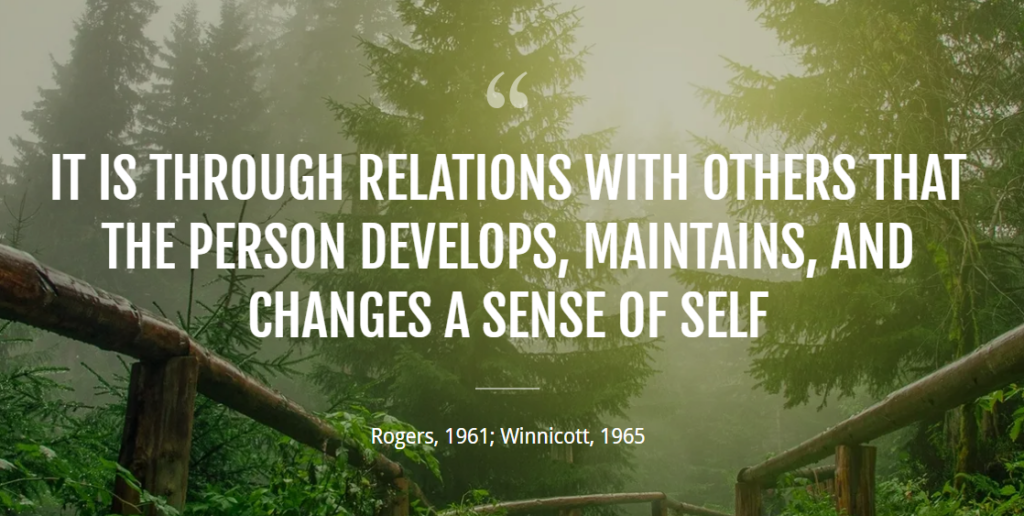
How you experience me, what you feel comfortable bringing into the room, what remains unspoken, what gets enacted between us: all of this carries meaning. The therapeutic relationship becomes a living context in which your characteristic ways of being with others can be noticed, understood, and – where needed – gradually transformed.
This means that I am not a neutral technician applying interventions from a distance. I am present with you genuinely, and as fully as the work allows. Because I believe that empathic presence itself has therapeutic value.
Insight into Unconscious Feelings
Many of the ways we feel, think, and relate to others are not random. They emerge from patterns that have developed over time, often outside of our awareness. These patterns become so ingrained that we end up using them, without realizing it, all day long. It’s virtually impossible for us to see and disarm them without the help of a skillful professional.
In therapy, we work together to bring these patterns into awareness – not just intellectually, but experientially – so that they can be understood, questioned, contextualized and gradually transformed.
As therapy progresses most of my clients begin seeing not only their unconscious motivations, but the information that lies hidden underneath. The disconnection to this inner information is often what lies at the root of the problem that prompts people to see me. Tapping into them helps them make the changes they want to make.
Non-Judgmental Listening
Most of us learn, early and well, which parts of ourselves are safe to show. In our personal and social lives, we become skilled at editing – softening what might disturb, concealing what might shame. This happens so automatically that we often no longer notice we are doing it.
Therapy offers something rare: a space where this sort of editing is not required.
Nonjudgmental listening is not simply the absence of criticism. It is a sustained willingness to receive whatever you bring – the contradictions, the confusion, the parts of yourself you have never said aloud – without flinching and without the subtle signals that tell you to make yourself more palatable.
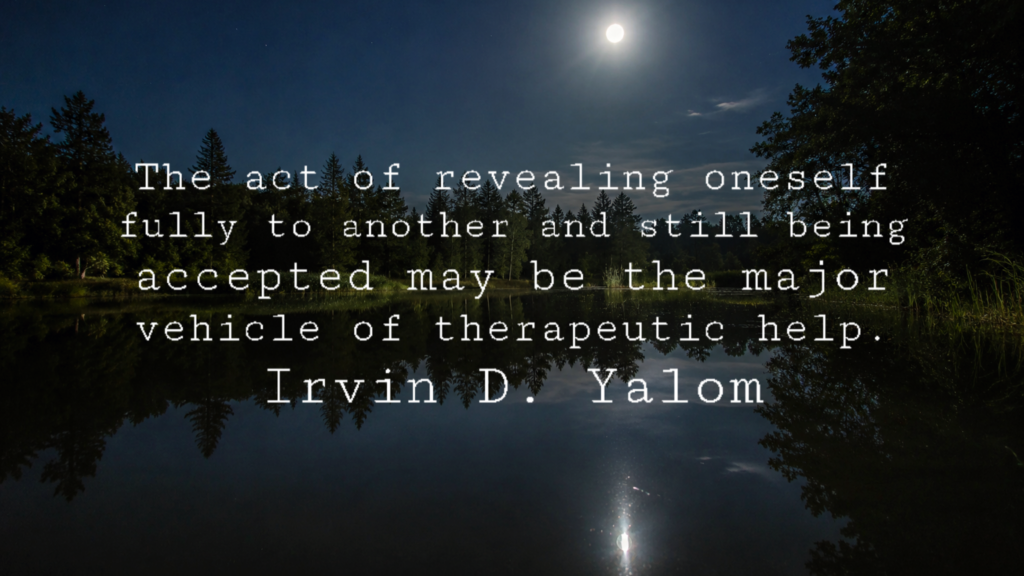
This is not about approval or the avoidance of difficult truths. It means that whatever emerges in the course of our work together will be met with curiosity rather than verdict – and that your worth in the therapy space is never conditional on what you reveal.
The Here and Now Focus
One of the most powerful – and often overlooked – resources in therapy is what is happening right here, between us, in this very hour. In our daily lives, we develop characteristic ways of relating to others, but they do not stay neatly in the past. And crucially, they will eventually show themselves in the therapy room itself.
This is the heart of what is called the here-and-now focus. The therapy session is, in a sense, a social microcosm; a living, immediate arena in which the same relational patterns that create difficulty in your life outside will sooner or later emerge in the space between us. How you experience me, what you feel comfortable saying, whether you find yourself seeking approval or bracing for judgment, none of this is incidental. It is some of the richest and most accurate material we have to work with.
Working in the here-and-now means that rather than relying solely on your account of difficulties with others – accounts that are inevitably partial and secondhand, we can turn our attention to what is happening directly and immediately between us. This makes the work more alive, more precise, and ultimately more useful. I am present with you in the session, and I can speak from my own experience of our encounter in a way that no amount of analysis of past events can quite replicate.
This shouldn’t be taken as the past being unimportant. It means that the present moment, attentively held, offers us a rare opportunity to understand and work with it directly.
Emphasis on the Meaning of Life
Much of traditional psychotherapy, particularly within the psychoanalytic tradition, has focused on the past. While this is genuinely important work, something vital can go unaddressed in this backward-looking gaze.
For me, human suffering is not only a symptom of what happened to us. It is also, often, a question. A question about who we are, what our lives are for, and whether any of it matters. These are not problems to be solved or defences to be interpreted. They are the fundamental conditions of being human.
In my practice, I strive to make room for these questions. Not to answer them – no therapist can do that – but to sit with them honestly, and to help you find your own orientation towards them. Questions about meaning, purpose, freedom, and mortality are not distractions from the therapeutic work. In many cases, they are the work.
This does not mean abandoning insight into the past. But a full account of a human life must also reckon with the present and the future: with the choices that remain open, with the values we are willing to live by, and with what we want our one life to actually be about.